
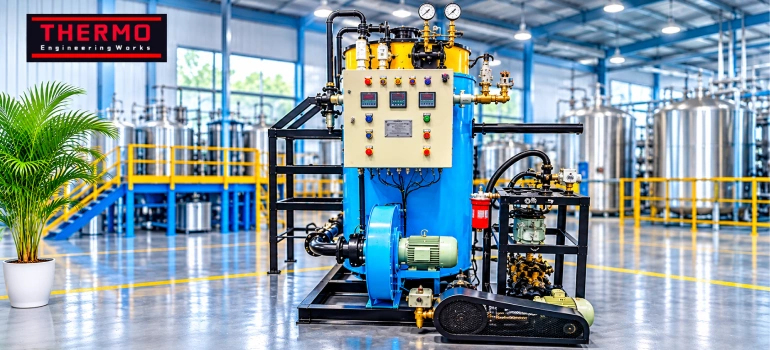
How Do Automatic Non IBR Steam Boilers Improve Industrial Productivity?
Industrial productivity depends on several factors, including equipment performance, energy efficiency, production speed, operational safety, and consistent process output. Steam plays an important role in many industrial applications, such as food processing, pharmaceutical manufacturing, textile production, chemical processing, packaging, and engineering operations. To maintain reliable steam generation and support continuous production, industries require efficient boiler systems that can meet their operational demands.
Automatic Non IBR Steam Boilers offer a practical steam-generation solution for industries that require controlled heating, simplified operation, and dependable performance. These boilers are designed to generate steam through automated operating mechanisms, reducing the need for continuous manual intervention. Their compact construction, automatic controls, and application-specific configurations make them suitable for various industrial environments.
Thermo Engineering Works provides steam boiler solutions designed to support industrial heating requirements and improve operational efficiency. By selecting an appropriately designed automatic Non IBR steam boiler, businesses can streamline heating processes, reduce unnecessary operating interruptions, and maintain consistent production conditions.
But how exactly do automatic Non IBR steam boilers contribute to industrial productivity? Understanding their working principles, operational benefits, applications, and selection criteria helps industries make informed equipment decisions.
What Is an Automatic Non IBR Steam Boiler?
An automatic Non IBR steam boiler is a steam-generating system designed to operate under the applicable provisions of the Indian Boilers Regulations (IBR) exemption framework. These boilers are generally intended for applications that fall within specified regulatory exemptions, subject to the boiler's design, capacity, pressure, and other applicable conditions.
Unlike conventional boiler systems that may require frequent manual adjustments, automatic models incorporate control mechanisms that help regulate important operating functions. Depending on the design, these functions may include water-level monitoring, burner operation, pressure control, and automatic safety shutdown.
The primary purpose of an automatic Non IBR steam boiler is to supply steam according to industrial heating requirements while simplifying routine operation.
Key Features of Automatic Non IBR Steam Boilers
- Automatic operation: Supports controlled boiler operation with reduced routine manual intervention.
- Pressure regulation: Helps maintain the required steam pressure through suitable control mechanisms.
- Water-level monitoring: Uses appropriate controls to monitor water levels and protect the boiler against unsafe operating conditions.
- Compact construction: Certain models are designed to occupy less floor space, making them suitable for facilities with limited installation areas.
- Operational convenience: Simplifies routine operation through automated controls and monitoring systems.
- Industrial versatility: Can support different heating and processing applications depending on its capacity and configuration.
- Safety mechanisms: May incorporate pressure switches, low-water cut-offs, and other protective devices.
The exact features and regulatory classification depend on the manufacturer's design and the applicable technical requirements.
How Do Automatic Non IBR Steam Boilers Improve Industrial Productivity?
Automatic Non IBR steam boilers improve industrial productivity by supporting consistent steam availability, reducing routine manual activities, and helping industries maintain stable heating conditions. Their contribution becomes particularly important in production environments where temperature control and uninterrupted thermal energy are essential.
Here are the major ways these boilers support industrial efficiency.
1. Reduces Manual Operating Requirements
Traditional boiler operations may involve regular manual monitoring and adjustments. These activities can consume valuable employee time and increase the possibility of operating inconsistencies.
Automatic Non IBR steam boilers use control systems to manage selected operating functions with limited manual intervention.
How this improves productivity:
- Reduces the need for continuous manual monitoring of routine functions.
- Simplifies starting and stopping procedures where automated controls are provided.
- Helps operators focus on other production responsibilities.
- Reduces repetitive operating activities.
- Supports more organized industrial workflows.
By reducing routine operational tasks, industries can improve workforce utilization and streamline daily operations.
2. Supports Consistent Steam Supply
Many manufacturing processes require a dependable supply of steam to maintain the desired temperature and processing conditions. Inconsistent steam availability can affect production quality, processing time, and overall output.
Automatic boiler controls help regulate steam generation according to the system's operating requirements.
Productivity advantages include:
- Supports consistent heating during production.
- Helps maintain suitable operating pressure.
- Reduces interruptions caused by avoidable operating fluctuations.
- Supports repeatable manufacturing conditions.
- Improves coordination between heating equipment and production machinery.
A properly sized boiler with suitable controls can help industries maintain more predictable production schedules.
3. Improves Heating Process Efficiency
Steam is widely used for transferring thermal energy in industrial applications. Efficient steam generation and distribution help industries achieve the required heating conditions without unnecessary energy consumption.
Automatic Non IBR steam boilers can support efficient heating through appropriate burner controls, insulation, water management, and system configuration.
Important efficiency-related benefits:
- Controlled fuel combustion through suitable burner arrangements.
- Reduced avoidable heat loss through proper insulation.
- Better management of operating pressure.
- Improved coordination between steam demand and boiler output.
- Potential reduction in unnecessary fuel consumption through appropriate operating practices.
Actual energy savings depend on boiler design, fuel quality, maintenance, operating conditions, and steam distribution efficiency.
4. Minimizes Production Downtime
Unexpected equipment interruptions can affect manufacturing schedules, increase operating expenses, and delay product deliveries.
Automatic control and protective systems help identify certain abnormal operating conditions and respond according to their programmed functions.
For example, low-water protection can help prevent unsafe operation, while pressure controls can help regulate the boiler within its intended operating range.
How downtime can be reduced:
- Automatic safety responses to specified abnormal conditions.
- Reduced dependence on frequent manual adjustments.
- Better operating consistency.
- Easier monitoring of important boiler parameters.
- Improved preventive maintenance planning.
Although automation cannot eliminate every breakdown, it can help reduce avoidable interruptions when combined with proper maintenance.
5. Enhances Workplace Safety
Industrial safety is essential for maintaining a productive working environment. Boilers operate using heat, pressure, water, and fuel, making suitable protective systems necessary.
Automatic Non IBR steam boilers can incorporate safety features that help protect equipment and operators.
Common safety provisions may include:
- Pressure switches for monitoring operating pressure.
- Safety valves for pressure protection.
- Low-water cut-off mechanisms.
- Temperature monitoring devices.
- Burner flame-failure protection.
- Emergency shutdown arrangements.
These features must be selected and installed according to the boiler design and applicable safety requirements.
A properly maintained boiler with suitable safety controls helps create a more controlled operating environment and reduces the likelihood of certain operational hazards.
6. Makes Better Use of Available Factory Space
Manufacturing facilities often need to accommodate multiple machines, storage areas, production lines, and material-handling systems. A large boiler installation may restrict available working space.
Many Non IBR boiler models are available in compact configurations, depending on their capacity and design.
Space-related advantages:
- Suitable options for facilities with limited installation areas.
- Better utilization of available utility space.
- Potentially simpler equipment placement.
- Easier integration into selected industrial layouts.
- More organized boiler-room arrangements.
Before installation, industries should evaluate access requirements, ventilation, maintenance clearance, fuel storage, and applicable installation regulations.
7. Supports Better Production Planning
Reliable steam generation helps production managers organize manufacturing activities more effectively.
When the boiler can deliver steam according to the required operating conditions, industries can coordinate heating processes with production schedules.
For example, a food-processing facility may need steam for cooking, cleaning, or heating operations. Similarly, a textile unit may require steam during fabric processing and finishing.
A suitably configured automatic boiler can help businesses:
- Coordinate heating cycles with production activities.
- Reduce unnecessary waiting periods.
- Improve process scheduling.
- Maintain more consistent operating conditions.
- Plan equipment maintenance around production requirements.
This supports better utilization of production resources and helps improve overall operational planning.
What Are the Major Industrial Applications of Automatic Non IBR Steam Boilers?
Automatic Non IBR steam boilers can support several industries that require steam for heating, processing, sterilization, and other thermal applications. Their suitability depends on the required steam pressure, capacity, temperature, operating hours, and applicable regulations.
1. Food Processing Industry
Food manufacturing facilities use steam in various production processes.
Common applications include:
- Cooking and heating food products.
- Steam-based cleaning operations.
- Heating processing vessels.
- Supporting selected sterilization processes.
- Maintaining required processing temperatures.
A reliable steam supply helps food manufacturers maintain consistent processing conditions and organize production activities.
2. Pharmaceutical Industry
Pharmaceutical manufacturing requires controlled operating environments and suitable thermal processing equipment.
Steam may be used for:
- Heating manufacturing vessels.
- Cleaning selected process equipment.
- Supporting approved sterilization systems.
- Maintaining process temperatures.
- Heating water for manufacturing operations.
The boiler and steam distribution system must meet the specific quality, validation, and regulatory requirements of the intended pharmaceutical application. Ordinary boiler steam should not automatically be considered suitable for direct product contact or pharmaceutical sterilization.
3. Textile Industry
Steam is widely used in textile manufacturing because many fabric-processing operations require controlled heat.
Applications include:
- Fabric dyeing.
- Washing and processing.
- Finishing operations.
- Steam-based pressing.
- Heating textile processing equipment.
A consistent steam supply helps textile manufacturers maintain process conditions and improve workflow coordination.
4. Chemical Processing Industry
Chemical manufacturing facilities use steam for various heating and temperature-control requirements.
Typical applications include:
- Heating chemical processing vessels.
- Supporting selected reaction processes.
- Maintaining process temperatures.
- Heating storage tanks.
- Supporting industrial cleaning operations.
The boiler capacity and steam pressure must be matched to the chemical process requirements.
5. Packaging and Manufacturing Industry
Steam can support several industrial production and material-processing activities.
Common applications include:
- Heating manufacturing equipment.
- Supporting selected packaging processes.
- Heating industrial materials.
- Cleaning and maintenance activities.
- Providing thermal energy for production machinery.
A suitable boiler configuration can help maintain reliable heating conditions across different manufacturing operations.
What Factors Should Industries Consider Before Choosing an Automatic Non IBR Steam Boiler?
Selecting the correct boiler is important for achieving reliable performance, controlling energy expenses, and meeting production requirements.
Before purchasing an automatic Non IBR steam boiler, industries should evaluate the following factors.
1. Steam Generation Capacity
The boiler should provide sufficient steam to meet the facility's maximum expected demand.
Consider:
- Total steam consumption.
- Number of machines using steam.
- Peak production requirements.
- Simultaneous equipment operation.
- Future production expansion.
An undersized boiler may struggle to meet demand, while an oversized system may increase unnecessary capital and operating expenses.
2. Required Operating Pressure
Different industrial processes require different steam pressures.
Determine the pressure requirements of connected equipment and select a boiler designed for those operating conditions.
3. Fuel Availability
Fuel selection affects operating costs, energy efficiency, and maintenance requirements.
Industries should evaluate available fuel options, fuel prices, combustion characteristics, and local environmental requirements before selecting a system.
4. Automation and Control Features
Evaluate the automation features available with the boiler.
Important considerations include:
- Automatic burner controls.
- Pressure monitoring.
- Water-level controls.
- Low-water protection.
- Emergency shutdown systems.
- Operating indicators and alarms.
5. Installation and Maintenance Requirements
A boiler should be easy to inspect, maintain, and operate safely.
Consider installation space, maintenance accessibility, water treatment requirements, ventilation, and availability of technical support.
6. Regulatory Compliance
The term Non IBR does not mean that a boiler is exempt from every safety or regulatory requirement.
Industries should verify the applicable IBR provisions, exemption conditions, state requirements, installation standards, and other relevant legal obligations before purchasing or commissioning the equipment.
How Does Regular Maintenance Improve Automatic Non IBR Boiler Performance?
Even an automated boiler requires periodic inspection and maintenance. Proper maintenance helps preserve operating efficiency, improve reliability, and extend equipment service life.
Important maintenance practices include:
- Water treatment: Maintain suitable feedwater quality to reduce scale formation and corrosion.
- Boiler cleaning: Remove accumulated deposits according to the manufacturer's maintenance schedule.
- Safety valve inspection: Ensure pressure-relief devices are inspected and tested as required.
- Burner maintenance: Check combustion performance and clean burner components.
- Control system inspection: Verify that pressure switches, water-level controls, sensors, and alarms operate correctly.
- Leak detection: Inspect steam lines, valves, fittings, and connections.
- Insulation checks: Repair damaged insulation to reduce heat loss.
- Professional servicing: Arrange periodic inspection by qualified technicians.
Following the manufacturer's maintenance recommendations helps industries avoid preventable equipment problems and maintain dependable steam generation.
Why Choose Thermo Engineering Works for Automatic Non IBR Steam Boiler Solutions?
Choosing the right boiler manufacturer or supplier is an important step in establishing an efficient industrial steam-generation system. Industries should look for equipment that meets their technical requirements, operating conditions, and applicable safety standards.
Thermo Engineering Works focuses on providing boiler solutions for industrial heating requirements. Businesses evaluating automatic Non IBR steam boilers should consider the suitability of the equipment, its automation features, steam-generation capacity, construction quality, and maintenance support.
What Should You Expect from a Suitable Boiler Solution?
- Equipment selection based on industrial steam requirements.
- Appropriate steam-generation capacity.
- Suitable operating pressure configuration.
- Relevant automatic operating and safety controls.
- Practical installation considerations.
- Maintenance guidance and technical assistance.
- Equipment configuration aligned with applicable regulatory requirements.
Before finalizing a purchase, discuss your steam consumption, fuel availability, operating pressure, working hours, and installation requirements with the technical team at Thermo Engineering Works.
Selecting a properly configured boiler can help industries improve their heating operations and support long-term production efficiency.
What Is the Future of Automatic Steam Boiler Technology in Indian Industries?
Indian manufacturing industries are increasingly focusing on operational efficiency, energy management, automation, and workplace safety. Steam-generation equipment is also evolving to support these requirements.
Automatic boiler technology is expected to become increasingly important as industries seek better control over their utility systems.
Some important developments and areas of improvement include:
- Advanced automation: More sophisticated monitoring and control systems can simplify boiler operation.
- Energy monitoring: Improved measurement of fuel consumption and steam output can help identify efficiency opportunities.
- Predictive maintenance: Monitoring operating parameters can support early identification of potential equipment problems.
- Improved combustion management: Suitable burner controls can help optimize fuel utilization.
- Digital monitoring: Connected monitoring systems can improve access to operating information.
- Environmental performance: Better combustion practices and efficient steam distribution can help reduce avoidable energy losses.
The adoption of these technologies will depend on industrial requirements, equipment availability, investment considerations, and applicable regulations.
Frequently Asked Questions (FAQs)
1. What is an automatic Non IBR steam boiler?
An automatic Non IBR steam boiler is an industrial steam-generating system designed to operate under applicable IBR exemption provisions. It uses automated controls for selected functions, such as pressure regulation, water-level monitoring, and burner operation, depending on its configuration.
2. How do automatic Non IBR steam boilers improve industrial productivity?
They improve productivity by reducing routine manual operating activities, supporting consistent steam generation, simplifying monitoring, and helping maintain stable heating conditions. These advantages can contribute to reduced avoidable downtime and better production planning.
3. What is the difference between IBR and Non IBR boilers?
IBR boilers are governed by the applicable Indian Boilers Regulations. Non IBR boilers generally fall within specified exemptions under those regulations, depending on technical and operating conditions. The classification must be verified against the current legal provisions rather than assumed from the boiler's commercial name.
4. Are automatic Non IBR steam boilers suitable for small industries?
Yes, certain models can be suitable for small and medium-sized industrial facilities, provided their steam-generation capacity, pressure, application, and regulatory classification match the requirements of the installation.
5. Which industries use automatic Non IBR steam boilers?
Industries that may use these boilers include food processing, textiles, pharmaceuticals, chemicals, packaging, engineering, and other manufacturing sectors requiring industrial steam.
6. Do automatic Non IBR steam boilers reduce operating costs?
They can help reduce operating costs through better control of selected operating functions, reduced unnecessary fuel consumption, and lower routine manual intervention. Actual savings depend on boiler efficiency, fuel prices, steam demand, maintenance, and operating practices.
7. What safety features are available in automatic Non IBR steam boilers?
Depending on the model, safety features may include pressure switches, safety valves, low-water cut-off devices, burner flame-failure protection, temperature monitoring, and emergency shutdown arrangements.
8. How often should an automatic Non IBR steam boiler be serviced?
Servicing frequency depends on the boiler design, fuel, water quality, operating hours, and manufacturer's recommendations. Routine checks should be performed regularly, while comprehensive inspections and safety-device testing should follow the applicable technical and regulatory requirements.
9. How do I select the right automatic Non IBR steam boiler for my factory?
Evaluate steam-generation capacity, operating pressure, fuel availability, production requirements, automation features, installation space, water quality, and applicable regulatory conditions. Consulting a qualified boiler professional can help identify the correct configuration.
10. Why should industries choose Thermo Engineering Works for boiler requirements?
Industries considering Thermo Engineering Works can discuss their steam-generation requirements, equipment specifications, operating pressure, automation needs, and installation conditions to identify a suitable boiler solution.